Wednesday, 31 July 2013

Arists in Focus: Crafty Stitching


For my second Artists in Focus post I'm excited to introduce you to Nuala Maguire, the crafty face behind Bluebird and one of the artists for ReFound Belfast. Nuala is, among other things, a free-lance textile artist specialising in up-cycling. Years and years ago, she actually started out with a degree in footwear and accessory design, but never took up work in the fashion industry. Instead, she trained as a conservator and worked for the museum and heritage sector, something she still enjoys doing today. 
Crafts was always something she kept up on the side, but when Nuala moved back to Belfast she started to seriously look into it as a business. Setting up her own crafts business was difficult. "Making the things is the easy part", she comments, "it's the 'selling' that requires a different set of skills." The Market Start Up Program run by Belfast City Council was a huge help to her in getting her business on the way. The project, which is free of charge, helps those dedicated to opening their own food or crafts business by teaching them necessary skills, such as marketing and financial planning. The program made her realise how important it is to have a brand identity, a theme. And as part of it, she got to sell her wares at St. George's Market, a beautiful food an crafts market happening every week on Saturday and Sunday in Belfast. 


For Bluebird, she creates beautiful vintagy accessories and jewellery, such as purses, earrings or bangles inspired by the 1940s. Her inspiration for bluebird comes from the Mend and Make Do spirit of the Second World War, where things and materials were re-used and mended. Nuala can literally find a use for everything. Even the tiniest scraps of fabric she works into pretty pins and earrings. A best-seller are the bangles she creates out of old plastic knitting needles by bending them into shape. 
"I look at 'rubbish' as a material. I love finding worth in what people discard and turning it into something useful and beautiful. The down-side is, I can't throw anything out anymore! I literally cannot walk past a skip!"
When one of her friends was about to throw out over a hundred vinyl records, she took them and created brooches and necklaces out of them. The new material was interesting for her to work with. It was a challenge, something different. Word got around quickly, and now people constantly 'gift' her 'left-over materials'.


Her work for ReFound follows similar principles. As one of the Refound artists, she up-cycles and re-styles old furniture which is then sold at the beautiful ReFound boutique at the heart of Belfast's city centre. Although working on furniture, Nuala always manages to incorporate her textile skills. She hand-embroiders old lampshades with delicate little birds while also re-designing big chunky armchairs (complete with hand-knitted cover of course!). 

Nuala tells me that for her final project in her undergraduate, she actually re-cycled old tea towels to create Victorian boots. It didn't take off back then though, the up-cycled art. It didn't stick. "Maybe it was just too early", she muses. Thankfully it seems to be working now!
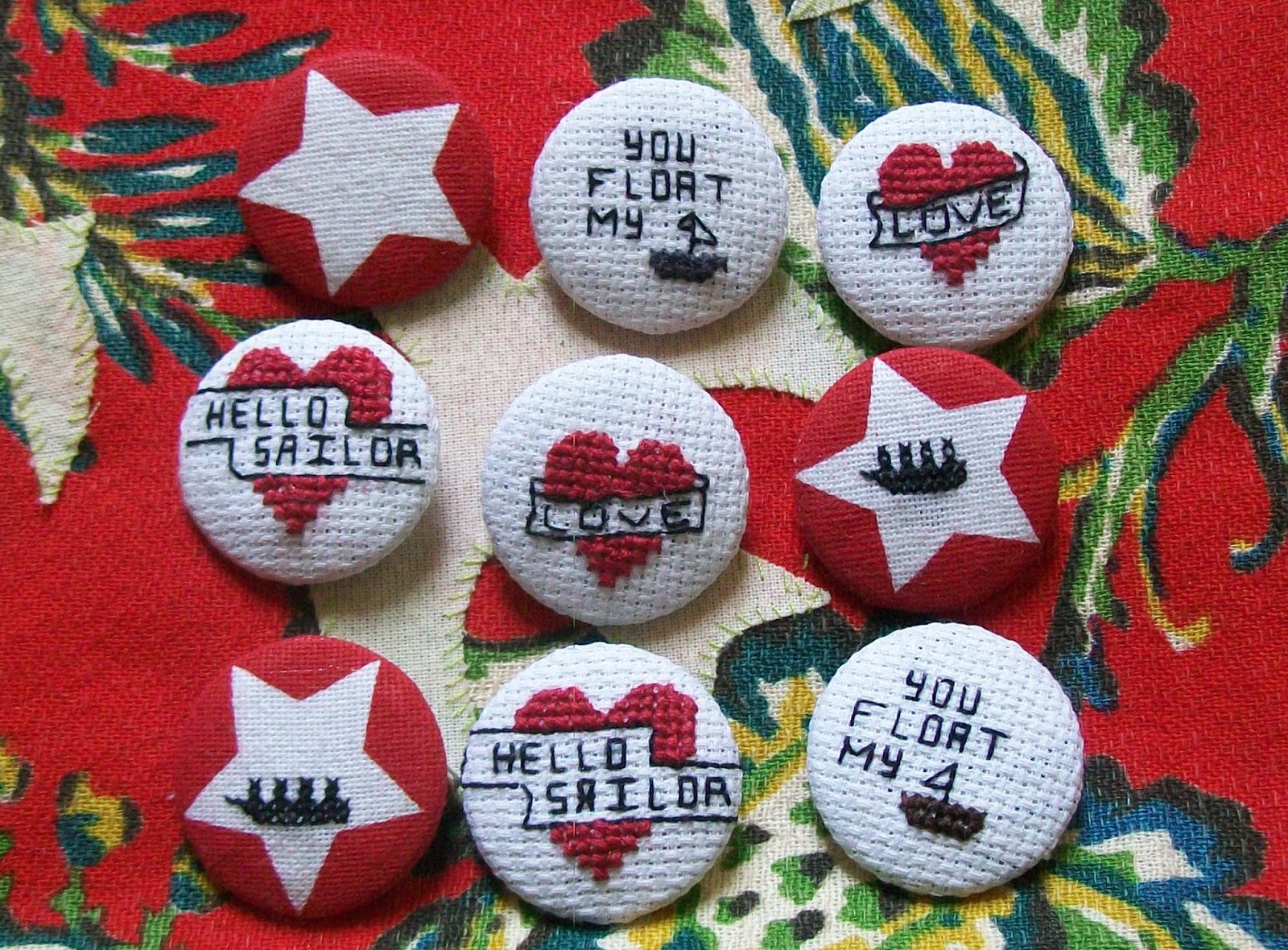
Nuala has been selling her products at a number of markets and festivals around Belfast. For the Maritime festival for instance, she created the cute nautically-themed buttons below. She's currently selling at the Black Box Bazaar. "I love selling at Markets. It's always a great buzz. They are a lot of time and effort though," she concedes. She couldn't manage one a week, she thinks. Also this would mean she would have to buy all the fabric and materials, which would kind of defeat the purpose of her re-cycled art. 


Working free-lance is not always easy. With the freedom of it also comes a great deal of insecurity. It's very organic, Nuala explains. There are bursts when she is drowning in work and then nothing happens for a few weeks. How does she deal with it? She laughs: "By being very good at time management and at 'not freaking-out'. I have a great support network. A lot of my friends are also free-lancers and that really helps." Networks are important not just for an occasional moral boost, but for artistic inspiration and learning. 
"I have learnt and benefited from other people so much. Fellow artisans and craftspeople have been a huge inspiration to me."
Nuala is part of Belfast Stich and Bitch, a local knitting circle (in case you're interested: they meet every Wednesday in the Starbucks behind Victoria Sq from 4.30ish!). She is also one of the volunteers helping with the Imagined Through Textiles Project. A partnership between ArtsEkta and Arts for All, this community textile project will create a number of tapestries based on the history of the ports and docks of Belfast, which will then be displayed in venues throughout the city. I can't wait to see the results!

When I ask Nuala why she is putting up with all the hassle and all the frustration of being a free-lance artist, she smiles and says:
"I'm a creator. I've always made things - it's who I am. If I no longer used my hands to make something, I would be miserable."
I guess craft just stole her heart...
Nuala Maguire also sells her creations online on her facebook page and - you'd be glad to know - she does bespoke orders too! So head on over and give her a big like!


Thursday, 11 July 2013

Pack your Bags!

Summer has finally arrived and how! Ireland has literally never been this hot. So get out there and enjoy the sun while it lasts. To accompany you on your romantic picnics, outdoor barbeques, trips to the beer garden and leisurely walks along the sea, I've gathered a selection of fairtrade and eco-friendly bags for you. Beautiful and practical, they will carry everything you may need, especially your clear conscience.


Let's start out with one of my all-time favourites from home: the Freitag bags. Freitag have been making super cool bags out of used truck tarps since 1993! The integrity of their designs is beautiful. They use seat-belts as bag straps and old bike tubes as lining. Freitag is also one of the last companies to still manufacture their goods in Zurich. Being Swiss, the quality of their bags is phenomenal. A Freitag bag will truly last you a life-time (believe me, I've seen it.). They don't just do courier-style bags by the way, at Freitag you can get funky laptop bags, totes, wallets, and backpacks too and no two Freitag products are the same. I particularly love the hand-bag model Joan (bottom right in picture). As you can see in the quirky 'How-to-use-video' here, it can fit anything from a baguette to a rolled up sleeping mat. The smart straps at the back of the bag, mean you can fix it to the handle-bar of your bicycle. Love it!


Planning on going to the beach? HandCrafting Justice sells the perfect summer tote for any beach adventure.  These beautifully simple canvas bags are super handy and their size means they will hold everything and anything you may want to bring with you. HandCrafting Justice provides access to Fair Trade markets for handmade goods created by enterprising women in the developing world. Their work fosters self-reliance and the creation of economic opportunities and networks, enabling women to achieve long-lasting success, lifting themselves and their families out of poverty. The artisans set the price for their goods themselves and HandCrafting Justice pays upon receipt, guaranteeing payment for each artisan. Have a look at their range of beautiful accessories, home-wares and gifts.


If you're going for a night out, but lacking that special accessory, I suggest you check out Escama Studio's fantastic range of handbags. I love the industrial look of these bags and still find it hard to believe they're made from used ring-pulls. Escama Studio is a social enterprise based in California and Brazil. The name means 'fish scales' in Portuguese, reflecting the look of their products. To achieve this unique aesthetic, Escama adapted traditional Brazilian crochet work, marrying heritage crafts with new materials and contemporary design. Eco-friendly, fair trade and stylish - these bags are just stunners in every way.


In case you were looking for something a little more affordable, why not check out the lovely accessory ranges of Earth Squared and PeopleTree. These cute and girly print bags are perfect for summer and retail between 20 and 30 pounds. If you follow my blog, you'll be sick of hearing me go on and on about PeopleTree... Earth Squared is one of my new discoveries though. A registered importer of BAFTS (British Association of Fair Trade Shops) they sell a lovely range of accessories and bags.

And saving the best for last, I want to introduce you to this beauty from fair trade label Nkuku:


Hand made from leather, dyed using extracts of tree barks and plants by a co-operative in Rajastan, the Savannah shopper is almost too beautiful in its simplicity. Each of the bags is lined with a colourful floral cotton fabric complementing its plain exterior. Nkuku is an eco-friendly fair trade home and lifestyle label with a clean and gorgeously simple aesthetic. Apart from bags, Nkuku sells a range of rustic home decor wares that I would love to fill my apartment with. The label's notebooks and journals are also to die for.

What about you? Which bag did you like best? Or are you in love with a different bag entirely? Let us know!


Wednesday, 3 July 2013

Swap till you Drop


Swap shops have been sweeping the nation and apparently everyone has been swapping rather than shopping. Having heard of the concept for the first time a few months ago, I decided to try and hold one myself. So here's my guide on how to swap shop:

1. Set a date and invite all your friends, neighbours, relatives (even strange aunty Betty), classmates, colleagues etc. over to your house. The bigger the crowd, the more fun! There's only one condition; they have to bring at least two old items of clothing they no longer wear... (it turns out, most people will bring way more!). 

If they are reluctant to come, tempt them with gorgeous treats and coffee! Me being me, there were lots of chocolate goodies going round at my swap shop. My wonderful mother-in-law was so good to provide us with gorgeous home-made chocolate truffles. Another real success were my strawberries dipped in chocolate. Light and delicious, they are incredibly easy to make!

The gorgeous spread at my Coffee, Cakes and Clothes swap shop

2. Before your guests arrive, set up the rooms and decorate! It's a good idea to get yourself some clothes hangers and rails... we ran out of hanging space very quickly. If you fancied it, you could give your swap shop a theme and decorate accordingly. I tried to create a bit of a vintage-tea-party-feel at mine by using my mother-in-law's good china and tying lace ribbons randomly to things. I also made these size signs... however, organizing the clothes into sizes proved a rather impossible endeavour.
3. Do it for a good cause! I decided to host my swap shop as a fundraiser for Hand of Hope, a small charity that organizes camps and fun events for orphan children in the Czech Republic. At some swap shops, there's a set entry fee. I decided to go with a suggested donation of €10, figuring that depending on how much people got out of it, they may want to give more or less accordingly. 

All the clothes lovingly displayed. Top right: my donation box served on a silver platter

4. As your guests trickle in, lay out and arrange the clothes they brought while they have a chat and a cup of tea. At the beginning of the swap shop, your guests can have a look around, scope out the goodies and try on some things, but they're not allowed to take anything yet! As you can see, it was all very civilized... at the start at least.


5. Then after a certain period of time (I waited for about an hour), you as the host have to give some kind of signal - anything from a bell to a horn to shouting really loudly will do - and let the swapping begin! Basically, your guests are then free to grab anything on offer that they like. NOTE: its a good idea to hide anything belonging to your household and wardrobe that you were wanting to keep! Believe me, at this point, the claws can come out. Things at my swap shop definitely got rather heated :). 

Hunting for that thing you'd seen just a second ago...

We offered up some of the bedrooms as changing rooms, but most girls just tried things on there and then... there was no time to run upstairs, obviously.

6. Finally, once your guests have waddled off satisfied, happily cradling piles of new found treasures in their arms, the only thing that's left for you to do is to clean up and count the money. It was quite an epic clean-up to be fair... (I now know how shop assistants in Primark must feel) but when I sat down with a glass of wine and opened my donations box, I found that we had raised over €150 for Hands of Hope! Not bad eh!                                                                 Overall the event was a huge success, tons of fun and as it doesn't take much preparation, a really easy and social way to raise some funds for charity. I will definitely host one again and I'm so chuffed with my new coat, skirt and swimsuit! The leftover clothes we simply dropped off at Oxfam.


Thursday, 27 June 2013

Charity Shop It


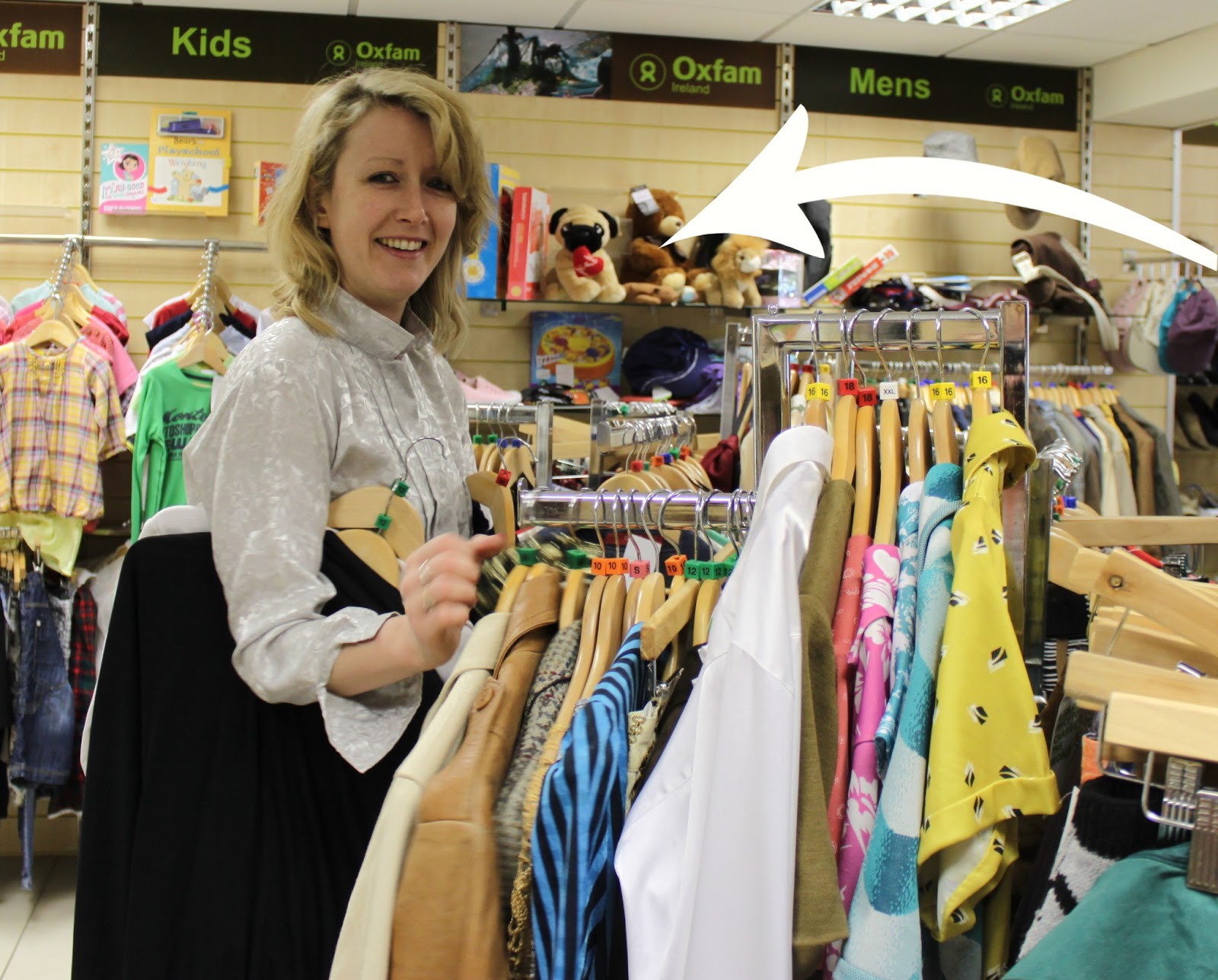
Charity shops are a great way to shop sustainably and have been a huge help to me in my year, but I never quite knew how they work. So to find out, I spent a Saturday volunteering at one.
The shop I chose is an Oxfam shop located on Botanic Avenue, Belfast. Close to Queens University, this is a lively neighbourhood full of students. 

This is Tra, the Manager of the store, who was kind enough to show me the ropes and answer my many questions. When I arrive, Tra is running around, just a tad stressed out, trying to run the shop on her own. Her two volunteers hadn’t shown up and on top of that, the checkout system isn’t working and she had to dig out the old till. It’s not that uncommon for volunteers not to show up. Tra just shrugs her shoulders and smiles. That’s the nature of running a shop with volunteers, she says. The only persons paid for working in an Oxfam shop are the store manager and the assistant manager (if there is one). On top of that there are overheads to be paid and volunteers get their travel covered as well as lunch, if they do a full eight hour shift, but the rest of the proceeds go straight to Oxfam’s many charitable endeavours.


Me happily at work, on the right: a shot of the great jewellery selection available at Oxfam Botanic

On the up-side, it means I get put straight to work. Tra has me sorting through a bag of new end-of-line clothes that has come in from C&A, a German clothes brand, in no time. C&A are one of the brands who send their unsold stuff to Britain, because they have no stores here. This way, they’re not making the charity shops their competition. I place the clothes on suitable hangers and price them. 

Piles of work to be done
Tra is looking through a bag of stuff that has come in earlier in the week. As the manager, she is in charge of sorting out the clothes. The bags arrive from collection points, are handed in by people and Oxfam Botanic also gets donations from a vintage reseller. Backstage, the work literally piles up. Tra pulls out battered brown leather shoes and discards them immediately. The same fate awaits a stained and torn suit jacket, some old curtains and a stretched out knitted jumper. She pauses over flowery pillow covers and eventually decides to keep them. A top shop top, a pair of new looking jeans and a vintage dress instantly pass the test.  It’s like in any shop, Tra explains, you have to think of what will work in your location and know your customers. She tries to focus on studenty stuff and the vintage sells extremely well. Her vintage selection is impressive and the prices are amazing. Tra tries her best to keep the selection of clothes on the rails fresh. Having new stuff on display every day draws repeat customers. If something hasn’t sold after two weeks it is discarded and put in the recycling.

snapshot of the lovely vintage collection at Oxfam Botanic

As I’m sorting through my bag, Tra gets me to write a short description off the item on the label as well. When I ask why, she tells me that they have a problem with people trying to switch tags to get things cheaper. She also admits that theft is an issue. Considering that most things in the shop cost a fiver or less and that the money goes to charity, this leaves me feeling rather sad and disappointed with humanity. People, please don’t steal from charity shops... okay?

I got my concentration face on! Steaming clothes is hard work :)

Working away, I watch Tra greet familiar faces, banter with customers and help out some tourists looking for directions. She has a particularly long chat with one lady who seems to visit the shop regularly. In many ways a charity shop is like any other clothes store; there’s the ‘business’ side of things with sales targets, ‘branding’, customer service and presentation, of course all within the limitations of not being able to ‘design’ your stock. In some important ways, however, they’re very different. It’s not just that they’re for charity. During my few hours working at Oxfam, I realise that they’re a place of community for people, especially the disaffected, people on the fringes of society. Of course charity shops, with their low prices, are also here to help out the disadvantaged in our society. I think there’s more to it though. Maybe the local character as well as the bustling, chaotic imperfectness of charity shops makes people, who feel out of place in brightly lit, perfectly clean and stylishly designed retail emporiums, feel at home and accepted.

I really enjoyed my time working at Oxfam Botanic. Volunteering at a charity shop is a great way to support a worthy cause, up your skills and meet some fun people and it won't hurt your CV either. You can find out more about volunteering at Oxfam here. Oxfam Botanic even has a facebook page, so give them a like!

Tuesday, 11 June 2013

My Five Favourite Vintage Shops in Dublin


This week I'm taking you on a little tour of lovely Dublin, highlighting my five favourite vintage shops over on Ms Wanda's Wardrobe.
I'm so excited to be blogging for this great sustainable fashion blog! Ms Wandas is definitely one to add to your blog reading list.
Head on over and discover all the lovely vintage there is to get in Dublin!

Thursday, 30 May 2013

Why Not Change?


On the 24th of April, the Rana Plaza in Bangladesh collapsed costing the lives of over 1100 garment workers, mainly women from rural areas. The incident is the worst disaster ever to have occurred in the global garment industry. News of the tragedy travelling around the world lead to a media frenzy and as global attention focused on the substandard and dangerous working conditions in factories in the fashion industry, big retail brands were quick to issue statements and promise change. But have not such promises been made before? Visit the website of any given highstreet fashion label and you will most likely find a section on 'sustainability', 'corporate responsibility' or 'ethical trading' where the company pledges its support for a better world in beautifully worded promises about company values and videos show happy workers stating how much they love working for this particular company. Why then can something like the Rana Plaza happen? Or should we ask why do we keep letting it happen?

Picture from the wreck of the Rana Plaza (from National Post)
Although the largest so far, Rana Plaza is only one event in a chain of disasters that have taken place in garment factories and sweatshops over the past few years. Only six months ago, over 100 people died in a fire at Tazreen Fashions in Ashulia near Dhaka and seven years ago 64 workers were killed in a similar building collapse. It is estimated that since 2005 at least 1,800 people have died in fires, stampedes, building collapses and other incidents in garment factories in Bangladesh. But once the river of media coverage dries up, how easy is it to forget any of this ever happened? Holding that £5 H&M t-shirt in our hands at check-out, do we ever remember? I cannot help but wonder, if a similar incident had happened in a UK factory, what would the consequences have been?

The garment industry in Bangladesh accounts for 80% of the country's exports and provides employment for roughly four million people. This makes for a complex situation and as everyone is busy playing the blame-game, I fear that very little again will change.

What can I do?
So rather than pointing fingers and finding scapegoats, maybe we had better thought about what we can do to help change happen. Here are a few suggestions:

Sign a Petition
Since the internet, petitions appealing to authorities, companies or industries for change have grown exponentially in size and number. A petition is an easy way to put pressure on an organisation to achieve change. You simply sign on with your name and email to demonstrate your support. There are even websites, like change.org, that are specifically tailored towards creating and sharing petitions.
And apparently, they work!
The petition by the charity War on Want to get UK retailers to take responsibility for the Bangladesh disaster was signed by over 80,000 people and on the 16th of May over 30 companies signed the Accord on Fire and Building Safety in Bangladesh, among them H&M, Primark and Marks & Spencer.

The accord commits the retailers to ensure and financially contribute to the building safety in the factories used by them. You can still sign the petition here.
I recently also signed the 1% Let's Fix Fashion campaign by UK ethical fashion blog Ms Wanda's Wardrobe. The campaign asks big fashion retailers to invest at least 1% into solving problems in their supply chain, making working conditions save, more ethical and environmentally friendly. 1% doesn't seem like a lot when you consider how much companies such as these must spend on marketing.


Get involved with a Charity
There are numerous charities out there fighting for change and justice. Find one in your local area and get involved with it, or support a big international organisation. For instance you could volunteer in your local Oxfam shop or get involved with the Fairtrade Foundation, War on Want or Action Aid (to name but a few). Charities always need support, and you can donate your money, time or simply your voice to their cause. To make it more fun, why not be creative about it? You can turn pretty much anything into a fundraiser, so why not a zombie march on Halloween, a glamorous tea party in the park or a local fashion show?

Shout loudly
Thanks to the internet, you can not only sign petitions, but actually contact companies directly. Nobody likes bad press, so why not tweet or facebook some of these retailers asking them to change and showing them that their consumers care? War on Want has made good use of this strategy, organizing people to harass  companies en masse using social media. If this is a bit too aggressive for you, then why not talk to family and friends about these issues and get them to think about it. Who knows, they may well feel the same and you may be able to support each other...

Buy differently and use differently
It is a fact that the garment industry employs millions of people and some argue that boycotting these products would destroy their livelihood. However, garment workers are often payed less than a living wage and are perpetually kept poor. So, if we never buy differently, how are things ever going to change?
Fair trade and ethical clothing brands provide great alternative options to highstreet fast fashion. Check out my links page to find a list of just a few or snoop around some of my old posts...
Other than buying more ethically, maybe it is time we had changed our attitude to fashion and clothes as a whole. Rather than 'just' buying something because its cheap, letting it drown in the depths of our wardrobe once we no longer like it, or throwing it out when it has lost its shape, why not think twice about the next item of clothing we buy? Think about how huge the effect could be if we were to revamp or restyle our old clothes rather than always buying new ones. Maybe it is time we started valuing the quality of a piece of clothing over its bargain price and invest in items that will last and come to define a part of our lives.

Thursday, 23 May 2013

Vintage Home Pop Up


It was a dreary and rainy weekend so what better to do than attend the cozy Kitchen Sink Saturday, a vintage home pop up sale organized by Uncle Shelby Vintage and interior design & marketing company Project Two. A home pop up is pretty much what it says on the tin. For a day or afternoon, you turn your house into a boutique/ jewellers/ haberdashers/ food market, but unlike being the highstreet; you get to make up all the rules!
So I headed on over to 6 Bladon Court in Stranmillis and standing in front of the door, I have to say, I did feel a little nervous. Walking into a complete stranger's house is weirdly exciting and unnerving at the same time. But the lovely hostesses and the relaxed atmosphere soon made me feel at ease.

Caitlin, the face behind Uncle Shelby Vintage, is currently trying to set up her own business selling vintage clothes. During the day, Caitlin works in PR, but at night she turns into a vintage-maniac, spending her hours doing anything and everything to make her dream happen. As with every emerging business, money is tight. A home pop up is a great and cheap way for Caitlin to display her collection, get to know her customers and give them the chance to see and try on her stock. Caitlin hand-picks all the vintage clothes she sells, assuring high quality, and sources them from all over the world. It was so much fun browsing through her beautiful selection in this unique environment.


My favourite of the bunch had to be this gorgeous 70's print dress. I love the lace overlay at the top! It would make the perfect outfit for any garden party or summer wedding.


For the event, Caitlin teamed up with Catherine and Patricia, the creative goddesses behind Project Two. Once again I was reminded of how much power there is in collaborating with people. Project Two contributed toward the design of the event and sold some interior goodies, such as plush cushions, carpets and luxury curtains, and the combination worked really well.


Taking place in Patricia's gorgeous house (I left with a serious case of house-jealousy), the atmosphere was great. There was music, welcome drinks and tasty snacks. The fun thing about a home pop up is that you can really make it your own and treat your customers to a novelty shopping experience.

So if you are thinking about setting up a shop of your own, why not try a home pop up first? It may be a great way for you to dip your toe in the water!

If you missed the event, don't worry, Uncle Shelby Vintage is now also available online and you can follow Caitlin on facebook on twitter to stay tuned for the next home pop up!